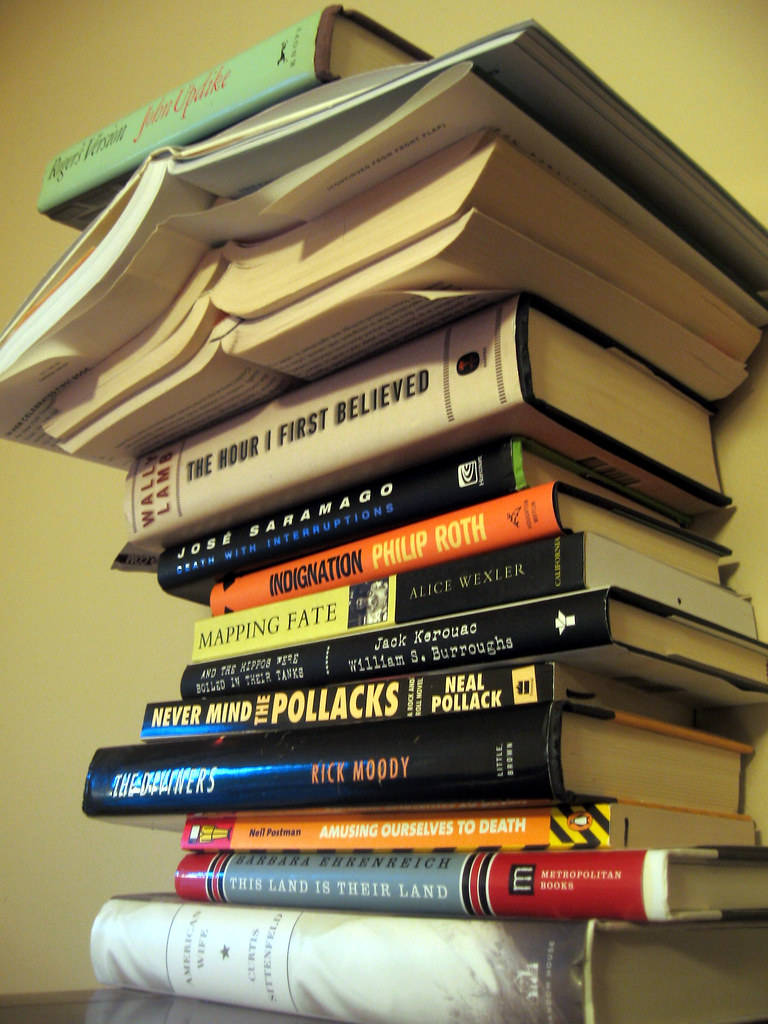
There is a shelf in Devon Cree's office at the University of Regina that he calls, privately, the shelf of failure. It holds thirty-one books, all of which he has started and not finished. The oldest has been there since 2007.
He keeps the shelf for a reason. He believes the books on it carry a kind of information about him as a reader that the finished books do not.
This is the small argument of an essay he wrote for this magazine in April, and it is an essay that has produced more letters to the editor than anything we have published this year.
The argument, briefly, is that the abandoned book is the more honest book. The finished book has been honoured. The reader has, by finishing it, declared the book worth the time. The abandoned book has been measured against something — patience, mood, taste, the competing demands of a Tuesday — and found, by the reader, lacking.
What was the reader doing the day she stopped reading the book? What was she missing in it? What does the abandonment tell us about the reader that the book itself could not?
These are the questions Cree wants to ask of his shelf.
There is a popular position, which Cree does not hold, that one should always finish what one starts. This position has a long pedigree, and it has, he concedes, a certain dignity. Nancy Pearl's rule of fifty — give a book fifty pages before you abandon it — is a reasonable variation.
But Cree's view, after twenty-three years as a literary archivist, is that the unfinished book is a normal feature of a reader's life and should not be treated as a moral failure.
It should, however, be treated as information.
He gives examples from his own shelf. There is a copy of Karl Ove Knausgaard's My Struggle, volume three, that he abandoned at page 142 in the spring of 2018. He had read the first two volumes with great pleasure. He stopped, he now believes, because his mother had been ill that winter and he could no longer tolerate the texture of childhood reminiscence.
The book was fine. The reader was not in the room for it.
There is a copy of Marlon James's A Brief History of Seven Killings that he abandoned at page 230 in 2016. He had loved the prose. He had lost the thread of who was speaking. He suspects, now, that he was simply tired, and that a re-attempt in 2027 will succeed.
He has noted the date on the inside cover, and intends to test the theory.
There is a copy of Hilary Mantel's The Mirror and the Light that he abandoned at page 540 — almost finished, in other words — and he has, he writes, no good explanation for this. He had loved the first two books of the trilogy. He had been deep in the third. He had stopped, simply, and not gone back.
He suspects this is the most interesting abandonment on the shelf, and the one he understands least.
Not all abandonments are equally informative. Some books are simply bad. Cree has a small sub-shelf for these — books abandoned because the prose did not survive contact with his attention. He does not draw lessons from these. He notes them and moves on.
The interesting books are the ones one expected to like. The novels by writers one had loved before. The non-fiction on subjects one cared about. The translations of books one had read in the original.
These abandonments tell the reader something. They do not always tell the reader what.
Cree's working method is to date the abandonment on the inside front cover, in pencil, with a single line of context. Stopped 12 March 2019, week after father died. Stopped 8 November 2021, the bad month at work. Stopped 4 June 2024, no good reason.
Over years, these inscriptions become their own small diary, and Cree has come to value the diary more than several of the finished books on the other shelves.
There is a second practice, which he recommends, of revisiting the shelf of failure once a year and choosing one book to try again. He has, over nineteen years, finished eleven of the thirty-one books this way. The other twenty are still there.
Some of them, he expects, he will never finish. This does not embarrass him. A book that resists three serious attempts has earned its place on the shelf, and he is willing to leave it there as a kind of monument to his own limits.
Limits, he writes in the essay's last paragraph, are not a thing the contemporary reader is encouraged to admit. There is a great deal of advice now on how to read more, and very little on how to read less, and almost none on what to do with the books one cannot finish.
Cree's modest suggestion is to keep them on a shelf, where they can be looked at, and where they can, in time, tell the reader the small truth that the finished books cannot.