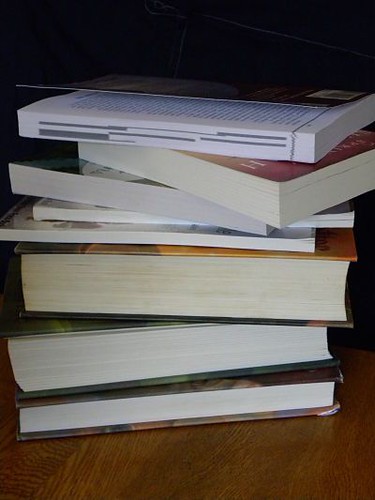
On the seventeenth of June, 2026, a reader on the second floor of a clapboard house in Wellfleet, Massachusetts, opened the first volume of Karl Ove Knausgaard's My Struggle at page one and set herself the task of reaching the end by Labor Day. The six volumes, in the Don Bartlett and Martin Aitken translations from Archipelago Books and Farrar, Straus and Giroux, came to 3,621 pages in the edition she had assembled, some hardcover and some paperback, the spines mismatched on the shelf.
She finished on the twenty-ninth of August. The point of the experiment was not endurance. It was to ask whether the six books, read consecutively rather than over the seven or eight years most English-language readers took them in, become a single book. The answer is more interesting than yes or no.
Knausgaard published the original Norwegian volumes between 2009 and 2011, and the English translations arrived in staggered fashion between 2012 and 2018. Most reviewers therefore read each one as a discrete event. The first volume, with its long meditation on the father's death, was received as a startling autobiographical novel. The second, with its account of falling in love in Stockholm, was received as a love story. By the time the fifth and sixth arrived, the conversation had moved on, and reviewers who had given the early books their full attention treated the late ones as supplements.
Read together in three months, the books reverse this hierarchy. The early volumes thin out; the late volumes thicken. The famous opening, the heart that beats and then stops, the body that is washed and dressed, retains its power. But the surrounding tissue, the long passages of childhood and adolescence in southern Norway, begin to feel like material the author had to write through in order to arrive at what he was after.
What he was after, this reader came to believe, is in Book Six. The six-hundred-page central essay on Hitler and on the unfinished name of his own project is the book Knausgaard wrote the other five to authorize. The essay is not, on the evidence of a sustained reading, a digression. It is the destination.
This is not the standard view. Most critics have treated the Hitler essay as an indulgence, a structural failure, an editor's lapse. James Wood, in his careful 2014 piece, hoped the project would not collapse under its own weight. By Book Six, in 2018, most reviewers thought it had. Read end to end, the essay reads differently. The five preceding volumes have built, with patience, the case that an honest first-person account of an unremarkable European life is itself a moral problem.
The problem is the title. Min Kamp, in Norwegian, is the same phrase Adolf Hitler used. Knausgaard says throughout the early books that this is accidental, that the title arrived before the implication did, that he is not trying to provoke. But by Book Six he is no longer denying. He is investigating. The investigation takes the form of a six-hundred-page essay on the original Mein Kampf, on the question of what it means for a writer to claim his own struggle as his subject, on the relationship between the unexamined life and the catastrophic one.
Bartlett and Aitken's translations are not uniform. Bartlett did the first five; Aitken came in for the sixth. The transition is audible. Aitken is willing to let the prose run longer, to keep the comma where Bartlett might have placed a period. Whether this is the translator or the original Norwegian growing in confidence is impossible to say from outside the source language, but the cumulative effect is that Book Six reads as if the sentences themselves have been waiting for the room.
There is a sequence in the third volume, the boyhood book, in which the young Karl Ove and his brother find a discarded condom in the woods behind their house. The passage is forty pages long. It contains no event. The two boys look at the condom. They go home. They eat dinner. The father, who will die in the first volume and is therefore already dead in the reader's mind, drinks a beer at the kitchen table and does not speak.
Read in isolation, the passage is what its detractors said it was: a writer indulging the conviction that any detail of his own life is worth recording. Read in the context of the six-volume arc, the passage is doing something else. It is establishing the texture of an unremarked-upon childhood so that the late investigation into the unexamined life has something to investigate.
The middle volumes are the hardest. Book Four, the year Knausgaard spent teaching in a fishing village in northern Norway at the age of eighteen, contains long passages about premature ejaculation that the publishers presumably could not cut and the author presumably could not lose. The book is, as a stretch of writing, often bad. It is also, in a sustained reading, structurally necessary, because Book Five returns to the same period from the vantage of the man who has now lived through everything Book Four did not yet know.
Book Five, the Bergen years, is the volume this reader had to push through. It is the book of the failed first marriage and of the writing apprenticeship that produced two novels few people read. It is also the book in which Knausgaard begins to formulate the aesthetic position the whole project is testing: that ordinary life, set down without selection, without arrangement, without the protective screen of a fictional persona, is the only honest subject left to the novel.
The position is not original. It is the position of the autobiographical project as it has run from Augustine through Rousseau to Sebald, and Knausgaard knows this. What is new in his version is the willingness to record material that no previous practitioner of the form would have committed to the page. The shame is the point. The shame is what makes the late investigation into the totalitarian use of the same first-person possible.
There is a quiet section in Book Two in which Knausgaard, newly arrived in Stockholm and newly in love with Linda Boström, walks his infant daughter through the streets of Södermalm in a stroller. He is angry at the indignity of the work. He is also, evidently, in love with the child. The two emotions do not resolve into a single feeling. The prose does not pretend they do.
This refusal to resolve is the book's central technique, and it is the reason the project survives the volume of material it contains. Most autobiographical writers, when they reach material that does not flatter, either omit it or shape it into a confession that the reader is invited to absolve. Knausgaard does neither. He records the material and leaves it on the page without comment, and then he writes the next sentence.
The cumulative effect, after three months of reading, is the slow erosion of the reader's expectation that a narrator will mediate. The narrator does not mediate. He sets down what happened and what he thought and what he felt at the time, and the reader is left to make of it what she can.
By the end of Book Six, the project has earned the right to the essay on Hitler. The essay does not justify the title; it confronts it. It asks whether the entire enterprise of writing one's own life at this length, in this detail, with this refusal to select, is morally available to a European writer in the twenty-first century, given what the same first-person was once used for.
The answer Knausgaard arrives at, slowly and without flourish, is that it is available only if the writer is willing to look at what the form has done in other hands. The essay is the looking. The essay is not separate from the autobiographical project; it is the project's only possible end.
Read in isolation, none of this is visible. Read across a single summer, in a house with a window onto a back yard with a single old maple, with the books stacked in the order of their arrival and crossed off as they were finished, the architecture becomes available. The six volumes are not six books. They are one long book that was published in six parts because no publisher would have taken it as a single binding of nearly four thousand pages.
Whether the reader who has not done the experiment should is a separate question. Three months is a real commitment, and there are other long books that ask the same. The reader of this piece set down her own copy of Book Six on the morning of August twenty-ninth, drank a cup of coffee on the back step, and felt what she had felt at the end of other large reading projects: not triumph, not relief, but a quiet sense that she had been somewhere and was now back, and that the place she had been was real.