The headquarters of Actes Sud sit on the rue de la Calade in Arles, two minutes' walk from the Roman amphitheatre and approximately eight hundred kilometres south-east of the Boulevard Saint-Germain in Paris where most of French publishing decides what it thinks about itself.
The distance is the point. When Hubert Nyssen founded Actes Sud in 1978 in the Provençal village of Le Paradou, the decision to base the press outside Paris was treated by the trade as either eccentric or doomed. Forty-eight years later, the press is the third-largest literary publisher in France by title count and the largest by any reasonable measure of editorial breadth.
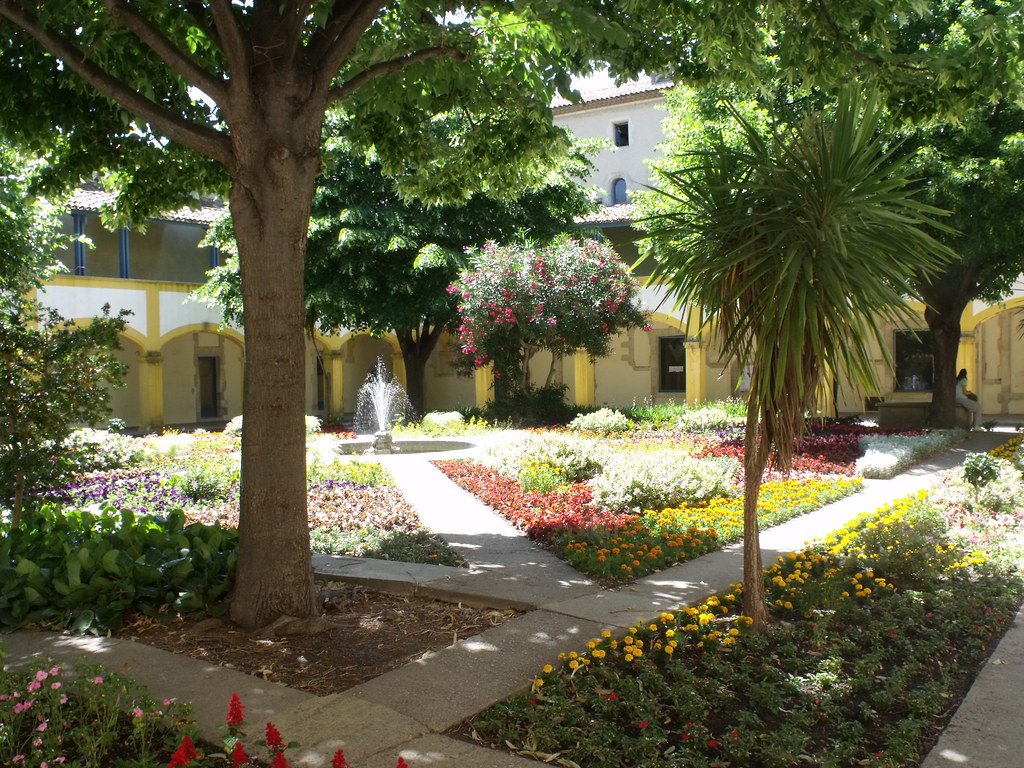
The Arles offices, into which the press moved in 1983, occupy three connected buildings around a courtyard. The buildings were originally an eighteenth-century private residence and a small adjacent workshop. They have been progressively renovated, but the courtyard remains the editorial centre of the house.
On a Wednesday morning in late May, the courtyard was occupied by two editors, a production manager, and a translator from Catalan named Sergi Boixet, who had come up from Barcelona for a two-day editorial meeting. Coffee was being served from a small portable thermos.
The meeting was about a forthcoming translation of a contemporary Catalan novel that Actes Sud had acquired in 2024. The editor responsible, Camille Vasseur, was working through the manuscript page by page with Boixet, with the production manager — a woman called Brigitte Loussot — sitting in to advise on schedule.
The conversation, in French and occasionally in Catalan, lasted two hours. It covered three structural questions about the novel's chapter ordering, four sentences whose French rendering Boixet wanted to revisit, and the question of whether a single Catalan word, used as a leitmotif throughout the book, should be kept untranslated or rendered with a near-equivalent French term.
The decision, reached without acrimony, was to keep the word in Catalan, with a translator's note on first appearance. Vasseur made the note in pencil in the margin of the manuscript. Boixet expressed cautious approval. Loussot adjusted the production schedule to allow for the longer copy-editing pass that the decision would require.
This is the rhythm of a working day at Actes Sud, and it is also, in microcosm, the argument the press has been making since 1978: that editorial work benefits from being conducted somewhere other than the geographical centre of one's national publishing industry.
The argument is not that Arles is intrinsically better than Paris. The argument is that Arles is different from Paris, and that the difference matters. The press's catalogue, across forty-eight years, reflects the practical consequence of that difference.
Actes Sud publishes between two hundred and fifty and three hundred titles a year, across literary fiction, translated literature, non-fiction, theatre, photography, and a substantial children's list. Its translation programme is one of the most ambitious in continental Europe.
The press has been particularly committed to literature from regions that the Parisian publishing world has, historically, paid less attention to: Scandinavian crime fiction in the 1990s, contemporary Arabic literature in the 2000s, Korean literary fiction in the 2010s. Many of these commitments preceded the trends they later helped to establish.
The acquisition of Actes Sud's Korean list, in particular, was driven by an editor named Choe Mikyung, who joined the press in 2005 and built, over fifteen years, what is now one of the most respected non-Korean Korean-literature lists in any European language. The list now contains more than ninety titles.
This kind of long, patient list-building is possible at Actes Sud, the press's editors will tell you, partly because the press is financially structured to permit it. The house has been controlled, since 1982, by the Nyssen family and a small group of long-term editorial directors. It is not publicly traded and is not under quarterly pressure to demonstrate returns.
The press has, of course, had difficult years. The 2008 financial crisis affected its export sales. The 2020 pandemic disrupted its production schedule and forced a one-year postponement of approximately twenty per cent of its scheduled titles. The current paper-price environment has compressed margins across the entire French publishing industry.
None of these pressures, however, has caused the press to fundamentally change its editorial method. It still publishes the books it wants to publish. It still acquires titles from translators and agents who would, in many cases, find an easier sale elsewhere.
The translation argument inside the house is unending and consequential. Actes Sud commissions, in any given year, between sixty and eighty translations from approximately twenty source languages. The editorial team responsible for translation, currently led by Nyssen's daughter Françoise, includes editors specialising in Slavic, Iberian, East Asian, Arabic, and Nordic literatures, among others.
Each editor reports, in practice, to the central editorial committee, which meets every Wednesday morning in the courtyard. The committee currently consists of eleven editors. Decisions about acquisitions above a certain advance threshold are made there.
The committee's procedural rule, in place since 1985, is that any editor can block any other editor's proposed acquisition once per year. The block is rarely used. When it is used, the proposed acquisition is, in almost every case, dropped.
This veto system is the closest thing Actes Sud has to a formal editorial philosophy. It assumes that any single editor can be wrong about a book, and that the house benefits from preserving a mechanism by which an objection can be heard and acted on.
The veto, Camille Vasseur said, is a way of keeping the house honest about what it can defend publishing. "If three of us cannot agree that we believe in a book, the book probably belongs at a different publisher."
The Boixet manuscript, returning briefly to the morning's meeting, was not in any danger of veto. It had been acquired the previous autumn after positive readings from four editors and a strong outside report from a Catalan-French translator the press had consulted for many years.
By half past eleven, the meeting in the courtyard had broken up. Vasseur returned to her office with the manuscript. Boixet went into the press's small lending library to consult an earlier Actes Sud Catalan title for terminological precedent. Loussot went back to the production schedule.
The courtyard, briefly empty, filled again at noon with three new editors and a different manuscript. The day, by Arles standards, was completely ordinary.